



Originally published: April 27, 2021. Last updated: Oct 15, 2026.
The safety and productivity of a worksite rise and fall on the equipment workers have within reach. Falls, struck-by incidents, chemical exposures, and hearing damage are not freak occurrences: they are the daily risks OSHA inspectors cite most often. This guide lists the essential industrial safety equipment every worksite should stock, explains the regulations behind each category, and closes with a buyer checklist owners can use before the next purchase order.
For a chemical-lab companion to this guide, see the PPE guide for chemical handling in labs, and for the broader site-level picture, the steps for business owners to ensure a safe premise.
The stakes are real and current. The Bureau of Labor Statistics recorded 5,070 fatal work injuries in the United States in 2024, a rate of 3.3 deaths per 100,000 full-time workers, with transportation incidents alone accounting for 38.2% of fatalities. Meanwhile, OSHA’s most-cited standards for fiscal year 2024 were fall protection (6,307 violations), hazard communication, lockout/tagout, and respiratory protection, which tells you exactly where worksites keep failing. Equipment alone does not fix that, but compliant, properly fitted equipment is the starting point, and one the agency now audits harder: OSHA’s December 2024 final rule explicitly requires that PPE properly fit each affected construction worker, effective January 13, 2025.
Eye and Face Protection
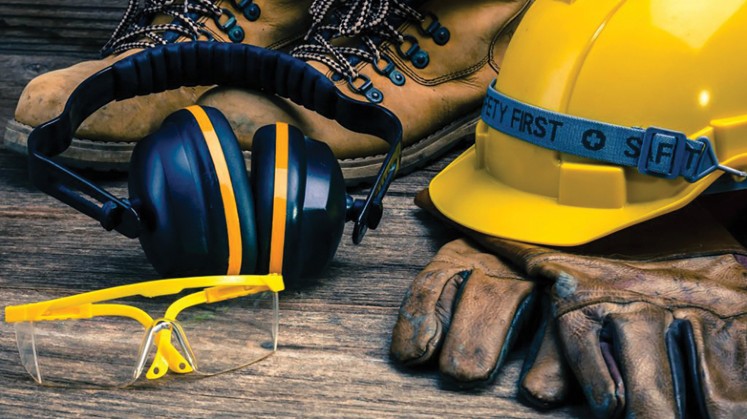
Safety glasses, goggles, and face shields protect against projectiles, dust, and chemical splashes. Welding, grinding, and chemical handling each demand different lens ratings, so match the eyewear to the task, not to what is in the supply cabinet. Note that eye and face protection was the ninth most-cited OSHA standard in FY2024 with 1,814 violations, which means many sites own the gear but fail to require or enforce its use.
Head Protection
Hard hats and safety helmets guard against falling objects, fixed structures, and electrical hazards. Select Type I or Type II and the correct electrical class for your work, and replace any helmet after a significant impact or at the manufacturer’s stated service life. Under the new fit rule, an oversized hard hat that shifts on the worker’s head is now explicitly citable in construction.
Hearing Protection
Earplugs and earmuffs matter because noise damage is cumulative and irreversible. Where exposures meet or exceed the OSHA action level, the hearing conservation program (audiometric testing, training, recordkeeping) applies, not just the earplugs. Offer multiple styles: the best hearing protector is the one workers will actually wear for a full shift.
Respiratory Protection
Dust masks are not respirators. Half-face and full-face respirators, powered air-purifying units, and supplied-air systems each serve different atmospheres, and OSHA’s respiratory protection standard (29 CFR 1910.134) requires medical evaluation, fit testing, and training before use. Respiratory protection violations jumped to the fourth most-cited OSHA standard in FY2024 (2,470 citations), so treat the program, not just the mask, as the purchase.
Hand and Arm Protection
Gloves must be chosen for the specific hazard: chemical-resistant gloves for solvents and corrosives, cut-resistant gloves for sharps and sheet metal, heat-resistant gloves for hot work. Check chemical compatibility charts rather than assuming one glove covers everything, and budget for replacement: worn gloves protect no one.
Foot Protection
Safety shoes and boots with impact, compression, and puncture resistance protect against the heavy objects and sharp debris common on industrial floors. For electrical work, add the appropriate EH rating. Fit matters here too: blisters and fatigue from poor fit quietly reduce compliance over a shift.
Fall Protection Systems
Harnesses, lanyards, anchors, and guardrails address the single most-cited hazard in American workplaces. Fall protection has topped OSHA’s violation list for fourteen consecutive years. Buying the harness is step one; having a competent person inspect anchor points and a written rescue plan is what makes the system real.
High-Visibility Apparel
Vests, jackets, and bibs keep workers visible around vehicles and mobile equipment, which matters given that transportation incidents cause nearly four in ten workplace fatalities. Select the ANSI/ISEA 107 class that matches vehicle speeds and lighting conditions on your site.
Gas Detection and Monitoring
Portable multi-gas detectors (oxygen, combustible gas, hydrogen sulfide, carbon monoxide) and fixed area monitors protect workers in confined spaces and around process equipment. Calibrate on schedule and bump-test before each use: a detector with a dead sensor is worse than none, because it creates false confidence.
Lockout/Tagout Devices
Locks, tags, hasps, and valve covers control hazardous energy during maintenance, and the lockout/tagout standard was the fifth most-cited OSHA violation in FY2024. Equipment purchases should be paired with written energy-control procedures for each machine.
Fire Suppression and First Aid
Fire extinguishers matched to the fire classes present, plus stocked first-aid kits, AEDs where response times are long, and emergency eyewash and shower stations for chemical areas. Inspect extinguishers monthly and service them annually; an expired extinguisher is a decoration.
Buyer Checklist Before You Order
OSHA’s general PPE standard (29 CFR 1910.132) requires employers to assess workplace hazards, select appropriate PPE, and train workers. Use this checklist on every purchase cycle. First, run or update the written hazard assessment and let it drive the list, not last year’s order form. Second, buy a range of sizes and confirm fit on real workers, which is now an explicit construction requirement and best practice everywhere else. Third, verify certifications (ANSI, NIOSH, etc.) rather than taking a catalog claim at face value. Fourth, budget for training, fit testing, and replacement stock, not just the initial purchase. Fifth, set inspection and replacement intervals and assign an owner for each equipment category. The PPE market keeps growing, Grand View Research values it at about $90.4 billion in 2025, which means more choice but also more marketing: let the hazard assessment, not the brochure, decide.
Frequently Asked Questions
What is the most essential industrial safety equipment?
There is no universal set: the essentials depend on your hazard assessment. Most industrial worksites need eye, head, hand, foot, and hearing protection plus task-specific gear like respirators, fall protection, and gas detection. OSHA requires the assessment to come first, then the equipment.
Does OSHA require PPE to fit properly?
Yes. OSHA’s December 2024 final rule explicitly requires that PPE properly fit each affected construction worker, effective January 13, 2025, aligning construction with the long-standing general industry requirement. Ill-fitting PPE can itself be the basis for a citation.
What were OSHA’s most-cited violations in 2024?
Fall protection led for the fourteenth straight year with 6,307 violations, followed by hazard communication, ladders, respiratory protection, and lockout/tagout. Eye and face protection ranked ninth, which signals that many sites under-enforce gear they already own.
How often should safety equipment be inspected?
Follow the manufacturer and the standard: fire extinguishers monthly with annual servicing, fall protection before each use by the worker plus annual competent-person inspection, gas detectors bump-tested before each use and calibrated on schedule, and eyewash stations activated weekly. Document everything.
What is smart PPE?
Smart PPE adds sensors and connectivity to traditional gear: gas detectors that alert supervisors remotely, hard hats with impact sensors, and wearables that monitor heat stress or fatigue. Grand View Research values the smart PPE segment at about $3.3 billion in 2025, growing far faster than conventional PPE.
How do I choose a safety equipment supplier?
Choose suppliers that offer a full size range, provide fit-testing support, can document certifications, and deliver replacement stock on short lead times. Get quotes from at least three, and verify that what arrives matches the certified specifications you ordered.
