



Originally published: February 11, 2022. Last updated: Oct 15, 2026.
Heating is one of the largest operating costs in any apartment building, and the system you choose (or inherit) shapes tenant comfort, maintenance workload, and energy bills for decades. The landscape has shifted dramatically since 2022: heat pumps have now outsold gas furnaces in the US for four straight years, efficiency standards have tightened, and the federal tax credits that sweetened upgrades expired at the end of 2025. Whether you own the building, manage it, or are choosing a system for a renovation, this guide compares the six heating systems that matter for apartments, with the efficiency ratings and cost logic owners actually use.
All efficiency figures below use AFUE (Annual Fuel Utilization Efficiency) for fuel-burning systems and the performance ratios published by Energy Star and the Department of Energy. For the property-protection side of building systems, see how to avoid property damage claims in construction.
1. Forced-Air Gas Furnace
The apartment default where ductwork already exists. Federal minimum efficiency is 80 percent AFUE; Energy Star requires 95 percent AFUE in the South and 97 percent in the North, with condensing models reaching 95 to 98 percent. Strengths: fast heat, shares ducts with central cooling, familiar to every technician. Weaknesses: duct losses in older buildings, dry air, and gas-price exposure. Best for: buildings with existing ductwork in cold climates where gas remains cheap relative to electricity.
2. Air-Source Heat Pump
The market’s direction. Heat pumps move heat rather than making it, delivering 2 to 4 times more heat energy than the electricity they consume, and can cut electricity use for heating by 50 to 75 percent versus electric resistance heat, per Department of Energy data. In 2025, 3.6 million heat pumps shipped in the US versus 3.2 million gas furnaces, up 12 percent. Strengths: highest efficiency, doubles as air conditioning, lowest running cost in mild climates. Weaknesses: capacity drops in extreme cold (modern cold-climate models handle far lower temperatures than older ones), higher upfront cost. Best for: moderate climates and any building where cooling is also needed.
3. Ductless Mini-Split Heat Pump
A heat pump variant that skips ductwork entirely: one outdoor unit serves multiple indoor heads, each with its own thermostat. Strengths: room-by-room zoning (tenants heat only occupied rooms), no duct losses, ideal retrofit for older apartment buildings with radiators or baseboards. Weaknesses: indoor heads are visible, upfront cost per zone adds up. Best for: older buildings without ducts, additions, and landlords who want to submeter or zone heating costs by unit.
4. Boiler With Radiant or Radiator Distribution
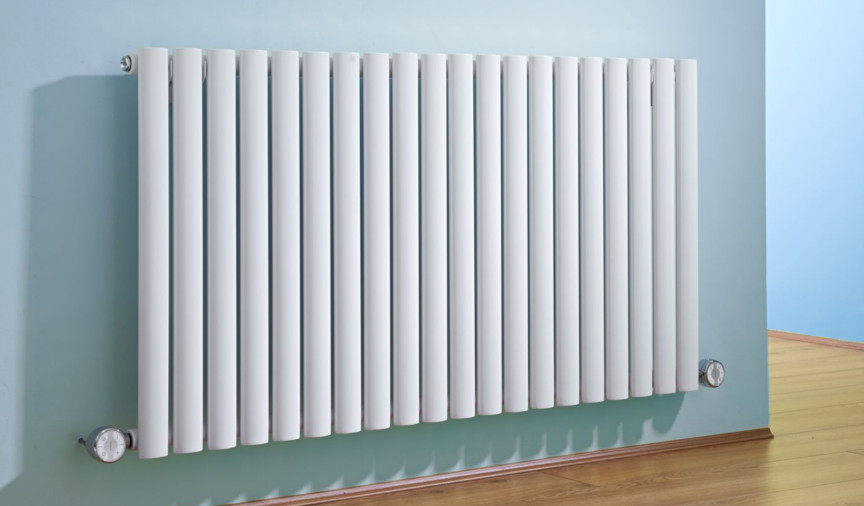
Common in older Northeastern and Midwestern apartment stock. Gas boilers carry a federal minimum of 82 percent AFUE with Energy Star at 90 percent; condensing boilers reach the mid-90s. Strengths: quiet, no ductwork, comfortable even heat, easy zoning by loop. Weaknesses: no cooling integration, slower response, and real-world efficiency can fall well below the label without diligent maintenance (annual service, bleeding radiators, checking pressure). Best for: existing boiler buildings where the distribution system is sound; replacement in kind usually beats conversion.
5. Electric Baseboard and Wall Heaters
Technically 100 percent efficient at converting electricity to heat, which sounds great until the utility bill arrives: electric resistance is the most expensive way to heat in most markets. Strengths: cheapest to install, no maintenance to speak of, per-room control. Weaknesses: highest operating cost, no cooling, slow recovery. Best for: mild climates with low heating loads, small units, or as supplemental heat. For any building with real winter, replacing baseboards with mini-splits is usually the highest-ROI upgrade available.
6. Dual-Fuel Hybrid (Heat Pump Plus Furnace)
The pragmatic answer for cold climates with expensive electricity: a heat pump handles mild weather at high efficiency, and a gas furnace takes over below the temperature where the heat pump’s economics fade. The switchover is automatic. Strengths: optimized running cost across the season, furnace backup during extreme cold. Weaknesses: two systems to maintain, highest upfront cost. Best for: cold-climate buildings where electricity is pricey relative to gas.
Comparing Running Costs: The Owner’s Math
Compare total cost of ownership, not just installation quotes: upfront cost plus 15 years of fuel at your local rates plus maintenance. The rule of thumb: a heat pump with a COP of 3.0 delivers about $3 of heat per $1 of electricity, so it beats gas wherever electricity costs less than roughly three times the gas price per unit of energy. Get local: the same heat pump that crushes gas in the Pacific Northwest loses to it in parts of New England. Always model with your utility’s actual tariffs, including demand charges for larger buildings.
Incentives in 2026: What Actually Exists
Do not budget around expired credits. The IRA’s 25C credit (30 percent up to $2,000 per year for Energy Star heat pumps) expired December 31, 2025 under the 2025 tax law. What remains: state and utility rebate programs, which vary widely and in many states still offer thousands per unit for heat pumps and high-efficiency systems, plus the IRA home-energy rebate programs (up to $8,000 to $14,000 for qualifying households) rolling out state by state. Check your state’s energy office and your utility’s rebate catalog before specifying equipment; the incentive landscape changes yearly.
Frequently Asked Questions
What is the most efficient heating system for apartments?
Air-source heat pumps, which deliver 2 to 4 times more heat energy than the electricity they consume. Ductless mini-splits add zoning efficiency on top. No fuel-burning system matches a heat pump’s operating efficiency in mild to moderate climates.
Are heat pumps really outselling gas furnaces?
Yes. Heat pumps have outsold gas furnaces in the US every year since 2021. In 2025, 3.6 million heat pumps shipped versus 3.2 million gas furnaces, a 12 percent increase, marking the fourth straight year.
What does AFUE mean?
Annual Fuel Utilization Efficiency: the percentage of fuel converted to heat over a heating season. An 80 percent AFUE furnace wastes 20 percent; a 97 percent AFUE condensing furnace wastes 3 percent. Electric heat pumps use COP or HSPF ratings instead.
Is the federal heat pump tax credit still available?
No. The IRA 25C credit of 30 percent up to $2,000 per year for Energy Star heat pumps expired December 31, 2025. State and utility rebates remain available in many areas; check your state energy office for current programs.
Should landlords replace electric baseboards with mini-splits?
Usually yes, where winters are real. Mini-splits cut heating electricity use by 50 to 75 percent versus baseboards, add cooling, and enable per-room zoning. The payback is typically among the fastest of any building upgrade.
What heating system suits an old apartment building with radiators?
Keep the radiators and upgrade the boiler to a high-efficiency condensing unit with proper controls, or add ductless mini-splits for zoned efficiency and cooling. Ripping out sound hydronic distribution to install ducts is rarely cost-effective.
