



Originally published: August 24, 2020. Last updated: October 25, 2026
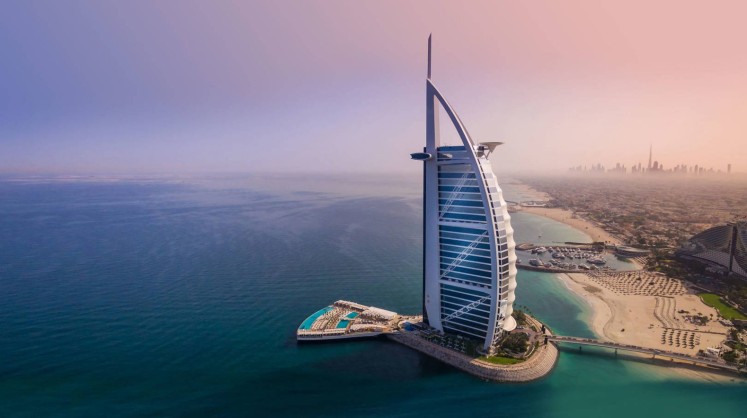
Some venues hold an event. The Burj Al Arab announces one. The sail-shaped hotel, 321 metres tall on its own island 280 metres off Jumeirah Beach, has been Dubai’s calling card since it opened on 1 December 1999, and for corporate hosts that recognition is the product: a product launch, awards night or client dinner staged here borrows the building’s prestige before a single speech is made. This guide is written for the people who plan and sign off those events. It covers the Burj Al Arab’s corporate event spaces with their capacities, matches each space to the business formats it serves best, and walks through what a corporate booking includes, how the planning process runs, and how to budget for a venue that publishes no rate card. Capacities below are as listed by Jumeirah for each space; pricing is quoted per event, so this guide focuses on the cost structure rather than figures that would be out of date before you read them.
Why Companies Book the Burj Al Arab
The business case rests on signalling and memory. Client entertainment, investor hospitality and brand launches all compete on how guests feel about the host afterwards, and few settings in the world do more of that work automatically. The hotel is an all-suite property of 198 duplex suites, it was named the World’s Leading Luxury All-Suite Hotel at the World Luxury Travel Awards 2025, and it topped YouGov’s Hotel and Airline Advocacy Rankings 2024 as the most recommended hotel brand in the UAE. For an events team reporting back to leadership, that brand halo is a measurable part of the return: photography, press coverage and social content from a Burj Al Arab event travel far beyond the guest list.
Demand context matters for planning. Dubai’s hotel market keeps tightening: the DET Annual Visitor Report 2025 recorded 154,264 rooms across 827 establishments at the end of 2025, citywide occupancy of 80.7 percent and average daily rates up 8 percent to AED 579. A busy market means the hotel’s event calendar fills early, especially in the October to April season, a point we return to in the booking process below.
The Corporate Event Spaces at a Glance
Al Falak Ballroom: Galas, Awards and Conferences at Scale
Al Falak is the flagship. Set on the 27th floor across 345 sqm and styled on an 18th-century Viennese opera house, with gold and silver detailing and a Swarovski crystal chandelier, it accommodates up to 300 guests. For corporate use it is the room for gala dinners, award ceremonies, annual company celebrations and plenary conference sessions that need theatre as much as floor space. It is also the most requested room in the hotel, which makes it the space to lock in earliest.
Suha: Board Meetings and Executive Sessions
At the other end of the scale, Suha hosts up to 60 guests in an elegant room with Gulf views. For business hosts this is the board meeting, executive offsite and private luncheon space: large enough for a full leadership team plus support, small enough to feel discreet, and polished enough that the setting itself communicates seriousness. Suha is the room corporate planners most often pair with an evening venue for a full-day programme.
Tameen Majlis: Small Meetings With a Sense of Place
Jumeirah’s meetings and events factsheet also lists the Tameen Majlis among the hotel’s event facilities. The majlis format, a traditional Arabian reception setting, suits smaller delegations, signing ceremonies and relationship meetings where regional character strengthens the occasion, particularly when hosting partners from the Gulf. Confirm the current configuration and capacity with the events team, as majlis setups are arranged to order.
Al Iwan: Private Dining for Up to 100
Al Iwan, the hotel’s Arabesque restaurant in the heart of the atrium, accommodates up to 100 guests and works as a private dining or full buyout space. Its gold and red styling and Middle Eastern menu make it a strong choice for client dinners with a cultural theme, regional partner receptions and sponsored hospitality where the cuisine should carry part of the message.
Gold on 27: Evening Receptions and Launches
Gold on 27, the hotel’s gilded bar on the 27th floor, hosts up to 150 guests and overlooks the Dubai skyline. It is built for the evening half of a corporate programme: launch receptions, stakeholder networking, sponsor drinks and after-dinner extensions of a ballroom event. Ask about exclusive buyout terms, because partial hire of a famous nightspot changes the feel of a private event.
Scape Terrace: Outdoor Receptions for Up to 180
The Scape terrace hosts up to 180 guests above the Gulf, with sunset views and a relaxed, open-air format. Corporate planners use it for product reveals with an after-party shape, media receptions and summer-season networking where mingling matters more than seated formality. Bar placement, entertainment and lighting carry the evening here, so production planning should treat the terrace as a stage rather than a room.
Marina Garden, Palm Garden and The Terrace: Outdoor Scale
For large outdoor formats, Marina Garden hosts up to 250 guests on lawns facing the sunset and the Gulf, and Palm Garden hosts up to 300 for receptions and celebrations that need decor freedom. Both support the branded landscape style of event, entrance builds, staged reveals and themed environments, that agencies favour for launches and company anniversaries. The Terrace is a different instrument: a 10,000 sqm overwater facility with two temperature-controlled pools and 32 air-conditioned cabanas, suited to daytime brand activations, wellness-themed corporate hospitality and festival-format company days. All outdoor spaces perform best in the October to April window, when evening temperatures are comfortable.
Executive Dining: Al Muntaha and Ristorante L’Olivo at Al Mahara
For the smallest and most senior guest lists, the restaurants do the hosting. Al Muntaha, on the 27th floor, holds one Michelin star for its French and Italian cooking under Chef Saverio Sbaragli. Ristorante L’Olivo at Al Mahara serves Chef Andrea Migliaccio’s Capri-rooted menu around a floor-to-ceiling aquarium. Private areas and buyouts at either give a chairman’s dinner or top-table client evening a level of culinary credibility few venues anywhere can match.
Matching the Space to the Corporate Format
Experienced planners work backwards from the format. For a conference with a gala attached, Al Falak takes the plenary and the dinner, with Suha as the speakers’ and organisers’ base. For a board or leadership offsite, Suha by day and Gold on 27 or a restaurant buyout by night keeps the group inside one service standard. For a product launch, the gardens and terraces deliver the reveal moment and the photography, with Al Falak as the weather-proofed dinner that follows. For incentives and reward travel, the Terrace and the suites do the work, with 198 duplex suites starting at 170 sqm giving a room block that is itself part of the reward. If your programme spans several of these formats, our guide to the types of events to plan for business is a useful framework for deciding which formats deserve the flagship venue and which can be handled elsewhere in the city.
What a Corporate Booking Typically Includes
Exact inclusions are set out in each proposal, but corporate bookings at this level are normally built from the same components. A dedicated events team contact from enquiry to event day, with the banqueting operation delivering the catering in-house: menus are a genuine strength here, spanning Arabic banqueting for Al Iwan, contemporary tasting formats for the ballroom and the kitchens behind the hotel’s Michelin-starred and celebrity-chef restaurants. Standard room dressing, service staffing at luxury-hotel ratios and guest handling, from the bridge arrival and valet to a staffed welcome, are part of the product rather than extras.
Production is the component to define most carefully in writing. The ballroom and gardens can support serious staging, lighting design, LED walls, live entertainment and, for outdoor venues, fireworks, but every element runs through the hotel’s technical rules: power capacity, rigging points, sound limits, load-in routes across the bridge and rehearsal access. A technical site visit with the events team and your production company before signing is not optional at this scale; it is how the contract ends up describing the event you actually intend to run. Branding is the other item to agree early, including where logos, builds and sponsor assets may appear, how the arrival sequence is dressed, and what the hotel will not permit in shared spaces. Hosts who treat guest experience as a designed discipline, in the way our overview of how to develop an effective customer experience strategy describes, tend to get the most from venues of this calibre, because the building supplies the wow and the planning supplies the coherence.
The Planning Process, Step by Step
Step 1: Fix the guest count and format. Every later decision, room, menu, production, price, depends on these two numbers. Arrive at the enquiry with a realistic count rather than a hopeful one, because the right room for 180 is wrong for 280.
Step 2: Enquire and compare proposals. Contact the hotel’s events team directly, or work through an experienced Dubai event agency that knows the building. Expect an itemised proposal covering venue hire or minimum spend, catering per head, beverages, staffing and standard equipment, with production quoted separately or through your agency. Compare itemisation, not totals: the differences between two quotes for the same evening usually sit in staffing ratios, beverage structure and what production is assumed.
Step 3: Site visit, including the technical pass. Walk the room at the time of day your event will run, then walk the logistics: load-in via the bridge, back-of-house routes, power and rigging, where guests arrive and where they queue. Bring your production manager and AV supplier to the same visit so every supplier works to the same constraints, and photograph routes and rooms for the production plan.
Step 4: Contract the details that matter. Setup and strike windows, rehearsal slots, menu tasting date, final numbers deadline, branding permissions, cancellation and attrition terms, and the rain plan for any outdoor element. At a hotel running 80 percent-plus citywide occupancy conditions, your contracted access hours are what protect the event from the building’s other commitments.
Step 5: Run the guest operation. Agree arrival waves for large events so the island entrance never becomes a bottleneck, brief drivers and hosts on drop-off points per venue, arrange shuttles for guests staying at other hotels if the programme runs late, and book the room block early if VIPs are staying in-house. Finish with a written running order shared by the hotel, your team and every supplier: timings, cues, contacts and contingencies on one document.
Lead times. For headline dates in the October to April season, start the conversation as early as your calendar allows; Al Falak in particular is contested by weddings and citywide gala season. Smaller rooms such as Suha can move faster, and a board meeting for 40 can sometimes be confirmed at far shorter notice than a ballroom production, but the venue’s popularity means short notice is a hope, never a plan.
Budgeting Without a Rate Card
The Burj Al Arab does not publish event prices, and any specific figure quoted outside a dated proposal should be treated with suspicion. What a planner can do is build the budget in the layers the hotel will price, so the proposal lands in a structure you already understand. The layers are: venue hire or a minimum spend for the headline spaces; catering per head, usually the largest single line; beverages, where package structure changes the total more than any other choice; production and entertainment; decor and florals; photography and content capture; and guest logistics, from valet and shuttles to the room block. Keep a contingency of at least 10 percent for the additions that surface in the final weeks, because at a venue of this standard they always do.
Cost control that does not damage the event is mostly about fit. Choose the room sized for your count rather than the grandest room available, since a half-filled ballroom reads as a planning failure, not generosity. Concentrate production spend on one or two signature moments, the reveal and the room reveal usually, instead of spreading it thinly across the whole evening. Use the hotel’s in-house strengths, catering, service and guest handling, rather than paying twice by importing equivalents. And schedule against the season where you can: a shoulder-season date or a weekday evening can change the commercial conversation without changing the guest experience at all.
Guest Logistics: Suites, Arrivals and Accessibility
The approach is part of the event. Guests cross the bridge with the sail rising in front of them, so plan the arrival as a produced moment: valet flow, a staffed welcome, signage that survives photography, and clear separation between event guests and hotel guests. For VIP accommodation, the 198 suites range from 170 sqm entry duplexes to the Royal Suite at up to 780 sqm, and a room block keeps senior guests inside the programme with no transport gaps. For accessibility and sustainability, both now standard questions from corporate stakeholders, raise requirements at the site visit: step-free routes to the chosen venue, accessible facilities and seating plans, and the hotel’s options for waste reduction, local menu sourcing and digital programmes in place of print. Confirm answers in the event plan rather than assuming them.
When the Burj Al Arab Is Not the Right Choice
Honest venue selection protects budgets. If your seated dinner exceeds 300 guests, the ballroom cannot hold it and a convention-scale venue will serve the event better. If the budget cannot meet the venue’s minimum spends without gutting production or catering, a premium mainland hotel will deliver a stronger evening for the same money. If the creative brief demands an industrial, artistic or deliberately informal atmosphere, a gallery or warehouse venue fits the message more honestly. The Burj Al Arab is the right answer when the occasion is about prestige, service and an unforgettable setting, and when the guest count and budget are built for it. For formats that need sheer scale or a different Dubai character, compare it against the alternatives in our roundup of auction and large-event venues in Dubai before committing.
Frequently Asked Questions
How many guests can the Al Falak Ballroom hold for a corporate event?
Jumeirah lists the Al Falak Ballroom at up to 300 guests across 345 sqm on the 27th floor. It is the hotel’s flagship space for gala dinners, award nights and conference plenaries, and because it is also the most requested room in the building, it should be booked earlier than any other space.
Which Burj Al Arab space works best for a board meeting or executive offsite?
Suha, which hosts up to 60 guests, is the natural choice for board meetings, leadership offsites and executive luncheons. For smaller delegations and signing ceremonies, the Tameen Majlis offers a traditional Arabian setting. Planners often pair a day in Suha with an evening reception in Gold on 27 or a restaurant buyout.
How much does a corporate event at the Burj Al Arab cost?
The hotel does not publish a rate card, and pricing is quoted per event in a written proposal. Costs are built from venue hire or a minimum spend, catering per head, beverages, production, decor and guest logistics, and they vary significantly with the space, the date and the season. Any specific figure not taken from a current proposal should be treated as unreliable.
How far in advance should a company book?
As early as the calendar allows for headline spaces and dates. Dubai’s hotels ran at 80.7 percent occupancy in 2025 according to the DET Annual Visitor Report, and demand peaks from October to April. Al Falak dates in that window are contested by galas and weddings, while smaller rooms can sometimes be confirmed at shorter notice.
Does the hotel provide catering and production support?
Catering is delivered by the hotel’s banqueting operation, which is one of its core strengths, and a dedicated events team manages the booking through to event day. Production elements such as staging, lighting, LED walls and entertainment are arranged around the hotel’s technical rules, so a technical site visit to confirm power, rigging, sound limits and load-in routes is an essential planning step.
Can a company brand the event spaces?
Branding is agreed with the events team as part of the booking, covering where logos, builds and sponsor assets may appear, including outdoor builds in the gardens and arrival dressing. Because the hotel is a global icon with shared guest spaces, expect clear rules about placement and scale, and confirm them in the contract rather than assuming open access.
