



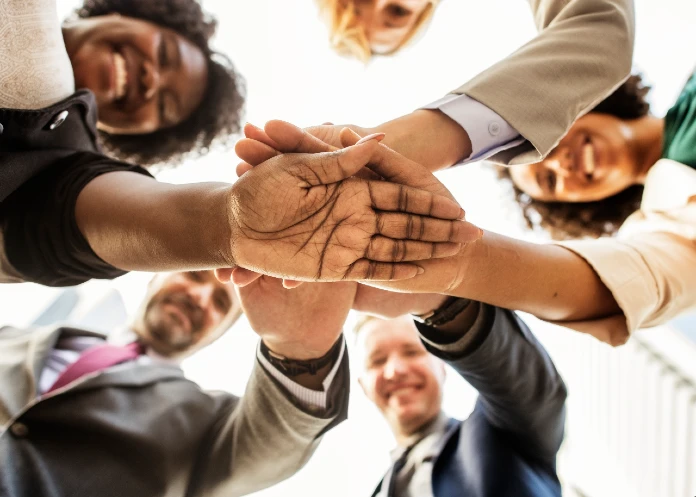
Generational differences in the workplace can influence communication, collaboration, expectations, technology use, career development, and management relationships. When employees have different experiences and expectations, misunderstandings can sometimes develop.
However, generational differences do not have to become workplace conflicts. The most effective approach is not to manage employees according to age-based stereotypes, but to understand individual needs, establish clear communication practices, encourage knowledge sharing, and create an inclusive environment where people at different career stages can contribute.
In this guide, you’ll learn how to overcome generational differences in the workplace, why these differences can create challenges, and what managers and employees can do to build stronger multigenerational teams.
What Are Generational Differences in the Workplace?
Generational differences in the workplace refer to differences in experiences, expectations, communication preferences, career stages, and perspectives among employees from different age groups.
A workplace may include employees who entered the workforce decades apart. They may have experienced different economic conditions, technologies, educational environments, management practices, and social changes during their careers.
These experiences can influence how people approach work. However, they should not be used to predict an individual’s personality, work ethic, technology skills, or preferred management style.
Research and workplace guidance increasingly emphasize the importance of avoiding generational stereotypes. The OECD, for example, has highlighted that employers should challenge common assumptions about differences in work performance, attitudes, and motivation across generations.
The goal, therefore, is not to make every employee work in the same way. It is to create shared workplace practices that allow people with different experiences and preferences to work effectively together.
Why Do Generational Differences Create Workplace Challenges?
Generational differences can become challenging when employees interpret different working styles as personal problems rather than differences that can be discussed and managed.
Several factors can contribute to these challenges.
1. Different communication preferences
Employees may have different preferences for meetings, email, messaging platforms, phone calls, written instructions, or face-to-face conversations.
A communication preference should not automatically be attributed to someone’s generation. Individual personality, role, experience, culture, and workplace environment can also influence how someone communicates.
2. Different experiences with technology
Employees who entered the workforce at different times may have had very different experiences with workplace technology.
Someone with decades of experience may have developed strong industry knowledge while working through several technology transitions. A newer employee may have more recent experience with certain digital tools but less organizational knowledge.
These differences can become an advantage when employees learn from one another.
3. Different expectations about flexibility
Employees may have different responsibilities and priorities outside work. Career stage, family responsibilities, health, commuting requirements, and personal circumstances can all affect preferences for flexible or hybrid work.
Managers should therefore avoid assuming that a particular age group automatically wants or rejects flexible work.
4. Differences in feedback and management preferences
Employees may respond differently to feedback, recognition, autonomy, coaching, and management styles.
A manager who assumes that everyone wants the same type of feedback can unintentionally create frustration.
5. Stereotypes and assumptions
Generational stereotypes can become a larger problem than the differences themselves.
For example, assuming that older employees cannot adapt to technology or that younger employees lack commitment can affect how managers assign work, provide training, evaluate performance, or communicate with employees.
The American Psychological Association has documented the long-standing tendency to describe generations through generalized workplace characteristics, illustrating why generation-based labels can easily become stereotypes.
How to Overcome Generational Differences in the Workplace
The best way to overcome generational differences is to focus on individual employees, shared expectations, communication, collaboration, and equal opportunities rather than trying to manage every generation separately.
Here are nine practical strategies.
1. Avoid Age-Based Assumptions
One of the most effective ways to overcome generational differences is to stop assuming that employees behave a certain way because of their age.
For example, avoid assuming that:
- Older employees dislike new technology.
- Younger employees lack commitment.
- Experienced employees resist change.
- Younger employees always want remote work.
- Senior employees prefer traditional communication.
- Younger employees need constant recognition.
An employee’s age may be one part of their background, but it does not explain everything about how they work.
Instead, managers should ask employees about their communication preferences, development goals, strengths, and challenges.
For example, rather than assuming an employee prefers email because of their age, a manager can simply ask:
“How would you prefer to receive project updates and feedback?”
This simple change replaces assumptions with information.
2. Establish Clear Communication Norms
Communication problems can become particularly frustrating in multigenerational teams.
Instead of expecting everyone to communicate in exactly the same way, establish clear team rules.
For example, define:
- Which communication channel should be used for urgent matters.
- Which issues require a meeting.
- When email is appropriate.
- How quickly employees are expected to respond.
- How project decisions should be documented.
- How managers will provide feedback.
- How employees can raise concerns.
Clear expectations reduce the need for employees to guess what their colleagues mean or how quickly they should respond.
The important point is to create shared communication standards without assuming that one generation has a naturally better communication style than another.
3. Adapt Communication to Individual Needs
A multigenerational workplace does not require managers to create completely different communication systems for every age group.
Instead, managers can provide reasonable flexibility.
For example, some employees may understand a new process best after a live demonstration. Others may prefer written instructions they can review later.
For an important project, a manager could provide:
- A short verbal explanation.
- Written instructions.
- A clear deadline.
- A place where employees can ask questions.
- A written record of important decisions.
This approach can benefit employees regardless of age.
4. Build Teams Around Complementary Skills
Mixed-age teams can create valuable opportunities for employees to share knowledge and perspectives.
AARP Research reported in 2025 that workers collaborating across generations commonly identified benefits such as sharing experience and knowledge, gaining new perspectives, understanding different communication styles, and improving creativity.
Managers can use this potential by building teams around complementary skills rather than simply grouping employees by age.
For example, a project team might combine:
- Industry experience
- Technical knowledge
- Customer knowledge
- Project management
- Emerging technology skills
- Communication skills
- Institutional knowledge
The objective is not to assume that older employees have experience or that younger employees have better technology skills. Instead, managers should identify the actual strengths of each employee and combine them effectively.
5. Encourage Two-Way Mentoring
Mentoring should not always be viewed as something that happens from an older employee to a younger employee.
Knowledge can move in both directions.
An experienced employee may help a newer colleague understand:
- Industry practices
- Customer relationships
- Organizational history
- Business processes
- Professional judgment
- Difficult workplace situations
A newer employee may help an experienced colleague learn about:
- New software
- Emerging digital tools
- New communication platforms
- Changing customer behaviors
- New approaches to specific tasks
AARP’s 2025 research found that cross-generational mentoring is already broader than the traditional older-to-younger model, with workers reporting peer-to-peer mentoring and mentoring people older than themselves.
A practical approach is to create two-way mentoring or knowledge-sharing partnerships rather than labeling employees as mentors and learners according to age.
6. Provide Equal Access to Training and Development
Training should be based on job responsibilities, skills, career goals, and identified development needs—not assumptions about someone’s age.
Avoid thinking:
“They are older, so they probably don’t need technology training.”
or:
“They are younger, so they don’t need professional development.”
Both assumptions can be harmful.
Instead, conduct regular skills assessments and give employees access to relevant development opportunities.
Training can include:
- Technical skills
- Leadership development
- Communication
- Conflict resolution
- Digital tools
- AI tools
- Management skills
- Industry knowledge
- Mentoring
- Career development
An age-inclusive learning culture allows employees at different career stages to continue developing their capabilities.
7. Address Age Bias and Stereotypes
Age bias can undermine collaboration even when there are no obvious conflicts.
Examples include:
- Assuming an older employee cannot learn a new system.
- Assuming a younger employee is inexperienced without evaluating their actual performance.
- Making jokes about someone’s age.
- Excluding employees from training because of assumptions about their career stage.
- Using age as a shortcut when evaluating someone’s ability.
- Assuming an employee’s career goals based solely on age.
In the United States, federal law prohibits covered employers from discriminating against workers age 40 or older because of age under the Age Discrimination in Employment Act. The law covers areas including hiring, firing, compensation, promotion, training, job assignments, and other employment conditions.
Legal protections differ by country and jurisdiction, so employers should consult the relevant employment laws where they operate.
Managers should also understand that creating an age-inclusive workplace is broader than legal compliance. Employees should be evaluated according to their skills, performance, qualifications, and job-related behavior rather than stereotypes.
8. Support Flexible and Hybrid Work Practices
Modern workplaces often include employees with different preferences and circumstances regarding where and when work takes place.
Instead of assuming that one age group wants remote work while another wants to work in the office, managers should focus on:
- Job requirements
- Team collaboration
- Employee needs
- Customer requirements
- Performance expectations
- Communication requirements
- Security and operational considerations
If hybrid work is possible, establish clear rules about availability, meetings, communication, and performance.
The same principle applies to office-based work: employees should understand what is expected rather than relying on assumptions about how colleagues from different generations prefer to work.
9. Train Managers to Lead Multigenerational Teams
Managers have a central role in preventing generational differences from turning into workplace conflict.
Manager training should cover:
- Unconscious assumptions and stereotypes
- Age-inclusive leadership
- Conflict resolution
- Communication
- Giving effective feedback
- Coaching employees
- Managing performance objectively
- Inclusive recruitment
- Knowledge sharing
- Team development
Managers should also learn to investigate the actual cause of a workplace problem instead of immediately blaming generational differences.
For example, if two employees disagree about communication, the issue might not be their age. It could be unclear responsibilities, poor documentation, conflicting deadlines, personality differences, or a lack of management direction.
Finding the real cause leads to a more useful solution.
How to Manage Generational Conflict at Work
Generational conflict should be handled like other workplace conflicts: identify the issue, listen to the people involved, establish facts, and agree on practical expectations.
A useful five-step process is:
Step 1: Identify the specific problem
Do not start with:
“These two generations don’t work well together.”
Instead ask:
“What exactly is happening?”
For example, the actual issue might be delayed responses, unclear instructions, disagreement over a process, or conflict about working hours.
Step 2: Listen to both employees
Give each person an opportunity to explain their perspective without immediately assigning blame.
Step 3: Separate facts from assumptions
Determine what actually happened and which parts of the disagreement are based on assumptions.
Agree on specific expectations.
For example:
- All urgent messages receive a response within one hour.
- Project decisions are documented in the team’s shared workspace.
- Feedback is discussed privately.
- Meeting agendas are shared in advance.
Step 5: Follow up
A solution is more effective when managers check whether the agreed changes actually improved the situation.
How Technology and AI Can Affect a Multigenerational Workplace
Technology can create another source of friction when employees have different levels of experience with particular tools.
This does not mean technology problems are inherently generational.
Employees of any age can have different levels of technical expertise.
Organizations introducing new software or AI tools should therefore provide:
- Practical training
- Clear documentation
- Time to learn
- Opportunities to ask questions
- Peer support
- Appropriate security guidance
- Clear expectations about how tools should be used
A useful approach is to create mixed-skill learning groups in which employees can support one another.
For example, an employee who understands an AI tool particularly well might help colleagues learn it, while those colleagues may contribute deeper industry or customer knowledge.
This turns technology adoption into a collaborative learning process rather than a generational competition.
Benefits of a Multigenerational Workplace
When organizations manage differences effectively, employees at different career stages can contribute complementary knowledge and perspectives.
Potential benefits include:
- Knowledge transfer: Experienced employees can share organizational knowledge and professional judgment, while newer employees can introduce different perspectives and approaches.
- Learning and mentoring: Employees can learn from colleagues with different experiences and career backgrounds.
- Broader perspectives: Teams with varied experiences can approach problems from different angles.
- Stronger collaboration: When employees understand each other’s working preferences and expectations, they can establish more effective ways of working together.
- Wider access to talent: An age-inclusive workplace can help organizations avoid unnecessarily limiting recruitment, development, or retention opportunities to particular career stages.
The OECD has argued that age-inclusive workforce policies can help employers make better use of workers across the life course and support lifelong learning.
What Managers Should Avoid
Managers trying to overcome generational differences should avoid:
- Treating generations as personality types.
- Assuming technology ability from age.
- Assuming younger employees lack loyalty.
- Assuming older employees resist change.
- Giving different opportunities based on age-based assumptions.
- Making age-related jokes or comments.
- Separating employees unnecessarily by generation.
- Designing policies around stereotypes.
- Assuming everyone wants the same type of feedback.
- Ignoring age-related bias.
- Blaming an entire generation for an individual workplace conflict.
The objective is not to eliminate differences between employees. The objective is to prevent those differences from becoming barriers to effective collaboration.
Multigenerational Workplace Checklist
Managers can use this checklist to identify areas for improvement:
- Are employees evaluated on job-related performance and qualifications?
- Are communication expectations clear?
- Can employees provide feedback about their preferred ways of working?
- Do employees have equal access to training?
- Are mentoring opportunities available across career stages?
- Are mixed-skill teams encouraged?
- Are age-based stereotypes addressed?
- Are employees given appropriate opportunities to learn new technology?
- Are workplace conflicts investigated based on facts?
- Are recruitment and promotion practices reviewed for age bias?
- Are managers trained to lead diverse, multigenerational teams?
- Do employees understand how to raise concerns about discrimination or harassment?
Final Thoughts
Generational differences do not have to create divisions in the workplace.
The most effective organizations do not try to place employees into rigid categories based on their age. Instead, they create an environment where people with different experiences, career stages, skills, and perspectives can work together.
Managers can make this possible by establishing clear communication expectations, challenging stereotypes, encouraging two-way mentoring, providing equal development opportunities, addressing age bias, supporting appropriate flexibility, and focusing on individual strengths.
The goal is not to make every employee work in the same way. It is to create a workplace where different people can work effectively together.
When organizations replace assumptions with communication and stereotypes with collaboration, generational diversity can become an opportunity for learning, knowledge sharing, and stronger teamwork.
Frequently Asked Questions
What are generational differences in the workplace?
Generational differences in the workplace are differences in experiences, perspectives, expectations, communication preferences, and career-stage needs among employees from different age groups. These differences can influence workplace interactions, but age alone should not be used to predict an employee's behavior or abilities.
How do you overcome generational differences in the workplace?
You can overcome generational differences by avoiding stereotypes, establishing clear communication standards, encouraging two-way mentoring, providing equal access to training, building teams around complementary skills, addressing age bias, and helping managers develop effective multigenerational leadership skills.
How can managers reduce generational conflict?
Managers can reduce generational conflict by identifying the specific source of disagreement, listening to employees individually, separating facts from assumptions, establishing clear expectations, and following up on agreed solutions. Managers should avoid treating an individual conflict as evidence of a problem with an entire generation.
How can different generations communicate better at work?
Different generations can communicate better by agreeing on common communication norms, clarifying expectations, choosing appropriate communication channels, documenting important decisions, and asking colleagues how they prefer to receive information and feedback.
What are the benefits of a multigenerational workforce?
A multigenerational workforce can create opportunities for knowledge transfer, mentoring, different perspectives, collaboration, and professional development. Research from AARP found that workers commonly associate cross-generational collaboration with knowledge sharing, new perspectives, better understanding of communication styles, and creativity.
How can companies prevent age discrimination in the workplace?
Companies can reduce age discrimination by using objective, job-related criteria for hiring and promotion, providing equal access to training, addressing age-based harassment and stereotypes, reviewing recruitment practices, and complying with applicable employment laws. In the United States, the EEOC enforces federal protections against age discrimination for workers age 40 and older under the ADEA.
Should companies manage each generation differently?
Companies should be cautious about managing employees according to generational labels. Employees within the same generation can have very different personalities, skills, experiences, and preferences. A better approach is to provide clear organizational standards while adapting support, communication, and development to individual employees where appropriate.
How can older and younger employees learn from each other?
Organizations can encourage two-way mentoring, mixed-skill project teams, peer learning, job shadowing, knowledge-sharing sessions, and collaborative training. The goal should be to create opportunities for employees to teach and learn regardless of age.
Learn More:
Why Self-Awareness Training Is Crucial For Emerging Leaders
How To Improve The Commitment of Employees
How Incompetent Leaders Destroy Teams
