



Originally published: Nov 12, 2019. Last updated: Oct 17, 2026.
Ask teachers what limits their students’ learning and many will point to curriculum or motivation. But a growing body of research points somewhere less obvious: the environment itself. The temperature of the classroom, the quality of the light, the background noise, whether students actually show up, and the emotional climate created by teachers and peers all shape how well children learn. These factors are not background details. In some cases they move achievement as much as major instructional interventions do.
This guide reviews what current evidence says about the physical and social learning environment, from the post-pandemic absenteeism crisis to the surprising science of classroom temperature. Understanding these forces helps educators, administrators, and parents make smarter decisions about where and how children learn, because even the best lesson plan struggles in a room that is too hot, too loud, or half empty.
What Counts as the Learning Environment
The learning environment has three layers. The physical environment includes the building, classroom layout, temperature, lighting, air quality, and noise. The social environment includes relationships among students and between students and teachers, classroom norms, and the sense of safety and belonging. The instructional environment includes how time is structured, how technology is used, and whether learning extends beyond the classroom walls. All three interact: a beautifully designed room cannot compensate for a hostile social climate, and the warmest classroom culture cannot overcome chronic absenteeism.
Researchers study these layers because they are among the most actionable levers in education. Unlike family income or neighborhood, which schools cannot change, the learning environment is largely within the control of educators and policymakers. Small, evidence-based improvements here can benefit every student in the building at once.
The Absenteeism Crisis: Students Cannot Learn What They Miss
The most basic environmental factor is presence itself, and American schools are facing a historic attendance crisis. Chronic absenteeism, defined as missing at least 10 percent of the school year or about 18 days, surged from 15 percent of K-12 students in 2019 to more than 28 percent in 2022. According to the American Enterprise Institute’s Return to Learn Tracker, which draws on district-level data from 44 states, the national rate fell to 25.4 percent in 2023 and to 23.5 percent in 2024. Progress, but still far above the pre-pandemic baseline.
Other trackers tell the same story. Education Week reported that a RAND Corporation analysis estimated about 22 percent of students were chronically absent in 2024-25, while FutureEd estimated 23 percent for 2023-24, closely matching AEI’s figures. Urban districts struggle most: roughly half reported more than 30 percent of students chronically absent. The causes are complex, including health challenges, transportation barriers, housing instability, disengagement, and habits formed during pandemic-era remote learning. Read the AEI report on post-pandemic chronic absenteeism and Education Week’s research roundup for the full picture.
Why does this matter so much for academic growth? Missing school means missing instruction, practice, and feedback that cannot be fully made up. Research consistently links chronic absenteeism to lower test scores, weaker reading proficiency by third grade, higher dropout rates, and reduced college enrollment. AEI’s Nat Malkus warns that without sustained effort, about half of the pandemic-era increase could become the permanent new normal, with millions more students chronically absent each year than before COVID. For schools, the implication is blunt: attendance is not an administrative detail. It is a learning intervention.
Temperature: The Invisible Hand on the Thermostat of Learning
Few environmental findings surprise educators more than the power of temperature. A meta-analysis by Wargocki and Wyon, published in Building and Environment, synthesized 18 studies on classroom temperature and children’s performance. The result: lowering classroom temperatures from 30 degrees Celsius to 20 degrees was associated with an average performance increase of about 20 percent on psychological tests and school tasks, with optimal performance below 22 degrees. The relationship follows an inverted U-shape: performance peaks in a comfortable range and falls off when rooms get too hot or too cold.
Other reviews confirm the pattern. A systematic literature review published in PMC found students’ cognitive performance peaking around 23 degrees and dropping sharply at 30 degrees. Studies in tropical climates show that even modest cooling produces gains: air conditioning that reduced classroom temperatures from about 30 to 25 degrees was associated with a 7.5 percent improvement in cognitive test performance, with the largest benefits for lower-performing students. The mechanism is straightforward: thermal discomfort increases mental workload and fatigue, draining the attention and working memory that learning requires. See the DTU meta-analysis on classroom temperature and performance and the PMC systematic review of indoor environmental conditions.
The practical takeaway for schools: invest in ventilation and cooling, especially in warm climates, and monitor actual classroom temperatures rather than assuming the thermostat setting reaches every room. For parents, it is worth asking how your child’s school manages heat during warm months, since the research suggests the learning cost of hot classrooms is real and measurable.
Light, Noise, and Air: The Other Physical Factors
Temperature is not the only physical factor with evidence behind it. Brighter lighting in the range of roughly 600 to 900 lux, combined with neutral temperatures, has been linked to better concentration and working memory in classroom studies. Natural daylight is generally preferable to harsh artificial light, though glare must be controlled. Noise is a clear negative: chronic exposure to traffic, aircraft, or hallway noise impairs reading comprehension and speech perception, with younger children and those learning in a second language most affected.
Air quality matters too. Poor ventilation raises carbon dioxide levels, which is associated with drowsiness and reduced cognitive performance. The pandemic taught schools hard lessons about ventilation, and the learning science gives them another reason to keep those improvements: fresh air is a learning intervention, not just a health measure. Classroom design choices, from acoustic ceiling tiles to operable windows to seating arrangements that minimize distractions, add up to an environment that either supports or sabotages attention.
The Social Climate: Relationships Drive Results
The most powerful environmental factor may be the least tangible: how students and teachers treat each other. John Hattie’s synthesis of educational research measured teacher-student relationships at an effect size of 0.72, among the strongest influences on achievement. Students who feel respected, known, and safe take more intellectual risks, ask more questions, and persist longer through difficulty. Conversely, classrooms marked by fear, humiliation, or peer hostility suppress exactly the participation that learning requires.
Building a positive social climate is a daily practice, not a program. It includes learning students’ names and interests, responding to wrong answers with curiosity, establishing clear norms against ridicule, and structuring activities so every student contributes. Peer relationships matter as well: cooperative learning structures that make students rely on each other build both academic understanding and social bonds. Schools with strong climates also see better attendance, creating a virtuous cycle where students want to show up and therefore learn more.
The Digital and Home Learning Environment
Learning environments now extend beyond school walls. Homework spaces, internet access, and device quality shape what students can do outside class, and the pandemic exposed deep inequities here. Students with quiet study spaces and reliable connectivity could sustain learning remotely; those without fell further behind. Even in normal times, a chaotic or unsupported home study environment limits what homework and reading can accomplish.
Schools can respond by designing homework that does not assume home resources, providing device and connectivity support, and keeping school buildings open for study where possible. Parents can help by carving out a consistent, quiet study spot and protecting study time from interruption. The rise of flexible and online formats has also made the digital environment a design choice: clear navigation, manageable cognitive load, and human connection in online courses all affect outcomes, as explored in our article on the benefits of online education for working professionals.
What Schools and Parents Can Do
Translating this research into action does not require massive budgets. High-impact, low-cost steps include:
- Make attendance a school-wide priority. Track it in real time, contact families after two absences rather than ten, and address root causes like transportation and health barriers.
- Monitor and manage classroom temperature. Aim for the low 20s Celsius where possible, and prioritize cooling in the hottest classrooms first.
- Reduce noise. Acoustic treatment, quiet hallway policies during instructional time, and classroom amplification systems all help.
- Maximize natural light while controlling glare, and ensure adequate ventilation in every instructional space.
- Invest in relationships. Advisory programs, morning meetings, and professional development on classroom climate pay achievement dividends.
- Design inclusive layouts. Flexible seating, clear sightlines, and minimal visual clutter help students focus and collaborate.
For educators building their broader professional skills, our guide on the benefits of training covers how structured development improves practice across settings.
Classroom Layout: Designing Space for Focus and Collaboration
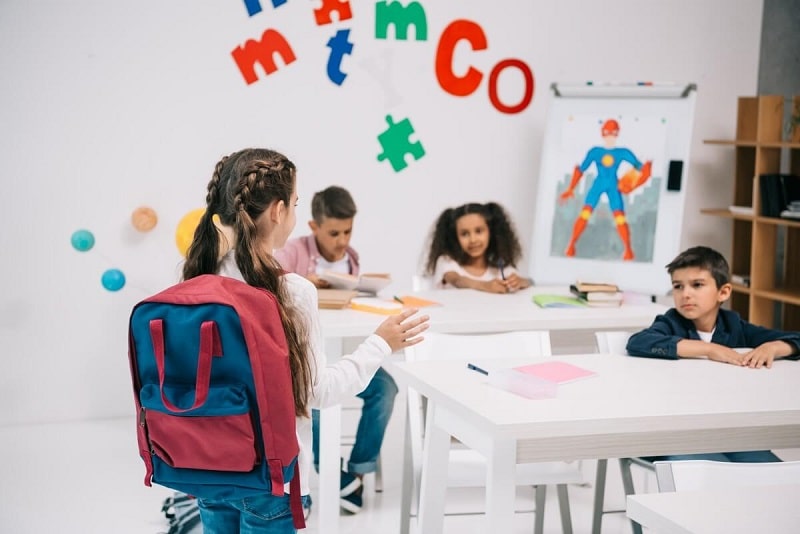
The arrangement of desks, the flexibility of seating, and the visual environment all send signals about what kind of learning happens in a room. Rows facing the teacher signal lecture and individual work; clusters and circles signal discussion and collaboration. Neither is universally better, but the layout should match the pedagogy. A teacher running daily group work in bolted-down rows is fighting the room itself.
Research on classroom design highlights a few consistent principles. Clear sightlines to the teacher and the board reduce off-task behavior. Flexible seating that lets students choose positions supporting their focus can improve engagement, though it works best with clear norms. Visual clutter competes for attention, so walls should display purposeful, current learning materials rather than years of accumulated decoration. And dedicated zones, a reading corner, a small-group table, a presentation area, let one room support multiple activity types without constant reorganization. None of these require renovation budgets; most require only intention and a weekend of rearranging.
Leadership, Funding, and Equity
Individual teachers shape their rooms, but principals and districts shape the buildings, and here equity gaps yawn wide. Schools in affluent areas are more likely to have modern HVAC systems, good lighting, quiet classrooms, and well-maintained facilities, while schools serving low-income communities more often contend with overheated rooms, noise, and disrepair. These physical disparities compound the achievement gaps they are supposed to help close.
School leaders set the tone in other ways too. Principals who make attendance a visible priority, protect instructional time from interruption, invest in teacher collaboration, and model respectful relationships create the conditions where good environments flourish. District policies on start times, class sizes, and facility maintenance are environmental decisions with learning consequences. Parents and community members can advocate effectively here: facility conditions are concrete, measurable, and hard for officials to dismiss, making them among the most winnable fights in education equity.
Auditing Your School’s Learning Environment
Schools serious about the learning environment should measure it the way they measure test scores. A practical annual audit covers five domains:
- Attendance: chronic absenteeism rates by grade and subgroup, plus early-warning data on students approaching the threshold.
- Physical conditions: spot temperature, noise, and lighting readings across classrooms in different seasons, plus ventilation checks.
- Climate surveys: anonymous student and staff surveys on safety, belonging, and teacher-student relationships, disaggregated by group.
- Time use: how much instructional time is lost to interruptions, transitions, and discipline, and where it concentrates.
- Equity review: whether the best physical conditions and the strongest climates are distributed fairly or concentrated in advantaged classrooms.
Publish the results internally, set improvement targets, and revisit them yearly. What gets measured gets managed, and the learning environment deserves the same disciplined attention as the curriculum.
Key Takeaways
- Chronic absenteeism remains the most basic environmental challenge: 23.5 percent of US K-12 students were chronically absent in 2024, far above the 15 percent pre-pandemic baseline.
- Classroom temperature has a surprisingly large effect: lowering rooms from 30 to 20 degrees Celsius is associated with about 20 percent better performance, with an optimum below 22 degrees.
- Lighting, noise, and air quality all move the needle on attention and learning; ventilation and acoustic treatment are learning interventions, not just facilities issues.
- Teacher-student relationships carry an effect size of 0.72 in Hattie’s synthesis, making classroom climate one of the strongest known influences on achievement.
- Schools should audit their environments annually across attendance, physical conditions, climate surveys, time use, and equity, and set improvement targets like any other priority.
- Parents can help through consistent attendance, a quiet study space at home, and asking schools how they manage heat, noise, and air quality.
Beyond the Classroom: Outdoor and Extended Environments
Learning environments extend past classroom walls. Outdoor learning spaces, school gardens, and well-designed playgrounds support physical development, creativity, and even academic concepts in science and math. Field trips and community-based learning connect classroom knowledge to the real world, deepening understanding and motivation. Libraries, laboratories, and maker spaces give students access to resources no single classroom can hold. Schools should treat these extended environments as part of the learning ecosystem, maintaining and scheduling them with the same care as classrooms, because variety in learning settings keeps curiosity alive across a long school year.
Frequently Asked Questions
What is chronic absenteeism and how common is it?
Chronic absenteeism means missing at least 10 percent of the school year, about 18 days. According to the American Enterprise Institute’s Return to Learn Tracker, the U.S. national rate was 23.5 percent in 2024, down from a 2022 peak above 28 percent but still far above the 15 percent pre-pandemic baseline. RAND estimated about 22 percent for 2024-25.
How does classroom temperature affect learning?
A meta-analysis of 18 studies found that lowering classroom temperatures from 30°C to 20°C was associated with about 20 percent better performance on school tasks, with optimal performance below 22°C. The relationship is an inverted U: both overheated and overly cold rooms impair the attention and working memory that learning requires.
Does classroom lighting really matter for achievement?
Research suggests it does. Studies link brighter lighting in the 600 to 900 lux range, combined with comfortable temperatures, to better concentration and working memory. Natural daylight is generally best, provided glare is controlled, while dim or flickering artificial light can sap alertness.
How does noise affect students’ learning?
Chronic noise from traffic, aircraft, or hallways impairs reading comprehension and speech perception, hitting younger children and second-language learners hardest. Acoustic treatment, quiet hallway policies during lessons, and classroom sound systems are evidence-backed responses.
Why are teacher-student relationships so important?
John Hattie’s synthesis of educational research measured teacher-student relationships at an effect size of 0.72, among the strongest known influences on achievement. Students who feel respected and safe take more intellectual risks, participate more, and persist longer, which is why classroom climate is a learning intervention in its own right.
What can parents do about their child’s learning environment?
Ensure consistent school attendance, provide a quiet and consistent study space at home, protect study time from interruption, and ask the school how it manages classroom temperature, noise, and air quality. Small, steady environmental supports compound into meaningful learning gains over a school year.
