



Originally published: May 25, 2022. Last updated: Oct 17, 2026.
Mesothelioma is a rare but aggressive cancer caused almost entirely by asbestos exposure. Because symptoms often appear 20 to 60 years after exposure, many patients are diagnosed in their 60s, 70s, or beyond, often with no awareness that a job they held decades earlier put them at risk. Understanding the disease, the treatment advances of recent years, and the support and compensation options available can make a meaningful difference for patients and families facing this diagnosis, both medically and financially.
This guide covers what mesothelioma is, who is at risk, how it is diagnosed and treated, the immunotherapy breakthroughs that have changed the outlook, and where to find medical, legal, and financial help. It is information, not advice: treatment decisions belong with your oncology team, and compensation questions belong with qualified mesothelioma attorneys or accredited VA representatives. Because the disease is rare, much of the most useful knowledge lives with specialists and patient communities rather than in general medical sources, so this guide also points you toward those expert resources.
What Mesothelioma Is
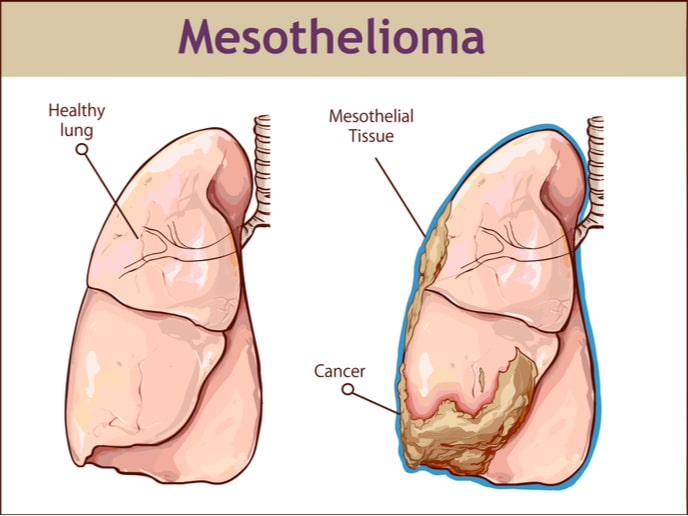
Mesothelioma develops in the mesothelium, the thin layer of tissue covering the lungs, abdomen, heart, and testes. About 3,000 new cases are diagnosed in the United States each year, according to the American Cancer Society; the CDC reported 2,803 cases in 2021 and 2,669 in 2022. It is rare compared with lung or breast cancer, which is one reason specialized expertise matters so much.
The disease comes in several types. Pleural mesothelioma, affecting the lining around the lungs, accounts for about 81% of cases. Peritoneal mesothelioma, affecting the abdominal lining, accounts for about 11%. Pericardial mesothelioma (around the heart) and mesothelioma of the tunica vaginalis are each under 1% of cases. The type and stage determine both treatment options and prognosis, which is why accurate diagnosis at a center experienced with the disease is so important, and why patients should understand their specific subtype before evaluating statistics.
Asbestos Exposure: The Cause and Who Is at Risk
Asbestos exposure is the primary cause of mesothelioma. The mineral’s heat-resistant fibers were used extensively in construction, shipbuilding, automotive brakes, insulation, and industrial settings through much of the 20th century. When disturbed, the fibers become airborne and can be inhaled or swallowed, lodging in the mesothelium where they cause inflammation and genetic damage over decades.
The latency period is extraordinarily long: 20 to 60 years between first exposure and diagnosis, with average age at diagnosis around 72. High-risk occupations include shipyard workers, Navy veterans, construction workers, insulators, plumbers, electricians, auto mechanics, and factory workers. About 30% of all US mesothelioma cases are military veterans, with Navy veterans at highest risk because asbestos was widely used aboard ships from the 1930s through the 1980s. Family members of workers also faced secondary exposure from fibers brought home on clothing.
If you worked in these settings decades ago, mention the exposure history to your doctor even if you feel well. Early evaluation of persistent respiratory symptoms, unexplained weight loss, or abdominal changes leads to earlier diagnosis, and earlier diagnosis expands treatment options. Keep any employment records, union documents, or military service records that establish where and when exposure occurred; these documents become important both medically and legally. Family members of exposed workers should also inform their doctors of the secondary exposure history, since household contact with contaminated work clothing was a documented exposure pathway before workplace hygiene rules improved.
Symptoms and Diagnosis
Pleural mesothelioma symptoms include persistent dry cough, shortness of breath, chest or rib pain, unexplained weight loss, and fatigue. Peritoneal symptoms include abdominal pain and swelling, bowel changes, nausea, and weight loss. These symptoms overlap with many common conditions, which is why the disease is often diagnosed at advanced stages.
Diagnosis typically involves imaging (CT, PET-CT), followed by biopsy to confirm the cell type: epithelioid (most common, best prognosis), sarcomatoid (most aggressive), or biphasic (mixed). Biomarker tests and staging workups complete the picture. Because mesothelioma is rare, pathology review at a high-volume center reduces misdiagnosis risk. Immunohistochemistry panels help pathologists distinguish mesothelioma from lung adenocarcinoma and other lookalike cancers, which is one reason expert pathology review matters so much for this rare disease. Seek a second opinion from a mesothelioma specialist before committing to a treatment plan; the rarity of the disease makes specialist input unusually valuable.
Treatment Advances: Immunotherapy Has Changed the Outlook
For decades, the standard first-line treatment was platinum-based chemotherapy, with median survival measured in months. Two FDA approvals have transformed the landscape. On October 2, 2020, the FDA approved Opdivo (nivolumab) plus Yervoy (ipilimumab) as the first immunotherapy regimen for previously untreated unresectable malignant pleural mesothelioma, the first new first-line drug option since 2004. In the CheckMate-743 trial, median survival was 18.1 months versus 14.1 months on chemotherapy, and five-year survival reached 14% versus 6% on chemotherapy.
On September 17, 2024, the FDA approved Keytruda (pembrolizumab) combined with pemetrexed and platinum chemotherapy as first-line treatment for unresectable advanced or metastatic pleural mesothelioma, cutting the risk of death by 21% with median survival of 17.3 versus 16.1 months. For peritoneal mesothelioma, the combination of cytoreductive surgery with heated intraperitoneal chemotherapy (HIPEC) achieves 36 to 53% five-year survival in selected patients, with some centers reporting around 65%.
Overall five-year survival for mesothelioma remains about 10 to 12%, reflecting late-stage diagnosis in most patients, but the trend is improving for those treated at experienced centers with modern multimodal therapy. Radiation therapy plays a supporting role, particularly for pain control and after surgery in selected cases. Clinical trials of novel immunotherapies, targeted agents, and combination approaches continue to expand options; ask your oncology team about trial eligibility early, since trials often have the most to offer when standard options are limited.
Getting the Right Medical Care
Where you are treated matters enormously for a rare cancer. High-volume mesothelioma centers offer multidisciplinary teams, surgeons experienced in complex procedures like extrapleural pneumonectomy and HIPEC, access to clinical trials, and pathologists who see the disease regularly. If travel is difficult, many centers offer remote second opinions and can coordinate with local oncologists.
Build your team deliberately: a thoracic or surgical oncologist experienced with mesothelioma, a medical oncologist familiar with current immunotherapy regimens, a radiation oncologist where indicated, and palliative care integrated early. Early palliative care improves quality of life and, in lung cancers, has been associated with better outcomes; it is about symptom control and support, not giving up on treatment. Nurses specializing in oncology, including those in the nursing specialisms that focus on cancer care, are often the most consistent presence through treatment.
Compensation and Legal Options: What to Know
Because mesothelioma is almost always caused by asbestos exposure, often through employer negligence in failing to warn or protect workers, multiple compensation avenues exist. More than 60 active asbestos trust funds hold an estimated $30 billion combined, established by bankrupt asbestos companies to pay victims; mesothelioma claims carry the highest scheduled values, and total compensation across claims typically ranges from $300,000 to $400,000. Personal injury and wrongful death lawsuits against solvent companies remain another avenue.
Veterans have dedicated options. The VA recognizes mesothelioma as service-connected with an automatic 100% disability rating, paying approximately $3,938.58 per month in 2026 in tax-free compensation, plus VA health care, Aid and Attendance benefits, and Dependency and Indemnity Compensation for surviving spouses. Verify current rates at filing through VA.gov.
Important: this is general information, not legal advice. Mesothelioma cases involve statutes of limitations, complex exposure histories, and specialized courts. Work with attorneys who focus specifically on mesothelioma and asbestos litigation, not general personal injury firms, and veterans should consider accredited VA claims agents or attorneys experienced with VA asbestos claims. Most reputable mesothelioma attorneys work on contingency and offer free case reviews. Act promptly: legal deadlines apply, and evidence is easiest to gather early.
Support for Patients and Families
A mesothelioma diagnosis affects the whole family. Patient support organizations offer peer mentoring, information, and community: the Mesothelioma Applied Research Foundation funds research and connects patients, and cancer centers typically provide social workers, support groups, and counseling. Caregivers need support too; the demands of accompanying a loved one through aggressive treatment while managing household, work, and emotions lead to high caregiver burnout.
Practical steps for families: organize medical records and exposure history early, designate one family member as the medical contact to streamline communication, explore clinical trials before exhausting standard options, and address advance directives and financial planning while the patient can participate fully. Keep a dedicated binder or digital folder with test results, treatment summaries, medication lists, and contact information for every provider; it saves repeated explanations and prevents dangerous gaps in a complex, fast-moving treatment course. Mental health support for patients and families is part of good cancer care; our resources on the signs of improving mental and physical health and behavioral techniques for mental health may help families cope with the psychological burden.
Prevention and the Bigger Picture
Asbestos is heavily restricted in many countries but not fully banned in the United States, and it remains in millions of older buildings. Disturbing asbestos-containing materials during renovation or demolition without proper abatement creates new exposures. Homeowners and workers should assume that insulation, floor tiles, roofing, and pipe wrap in pre-1980 buildings may contain asbestos and hire licensed abatement professionals for testing and removal. Occupational safety regulations now require exposure controls, but enforcement and awareness gaps persist, particularly in demolition and informal construction work.
The long latency means cases will continue for decades even with no new exposure, which is why research funding and specialist capacity remain important. Supporting mesothelioma research foundations and participating in registries and trials when possible contributes to the progress that future patients will need.
Understanding Staging and Prognosis Factors
Mesothelioma staging describes how far the cancer has spread and guides treatment choices. The TNM system classifies tumor extent, lymph node involvement, and metastasis, grouping patients into stages I through IV. Earlier stages may be candidates for aggressive multimodal therapy combining surgery, chemotherapy, and radiation, while advanced stages focus on systemic therapy and symptom control. Beyond stage, the strongest prognostic factors are cell type, with epithelioid histology carrying the best outlook, followed by biphasic and then sarcomatoid; patient age and overall fitness; and whether complete surgical resection is achievable. Biomarkers and molecular profiling are increasingly used to refine prognosis and identify trial options. Ask your oncologist which factors apply to your specific case rather than relying on population statistics, which blend very different situations.
The Cost of Treatment and Financial Assistance
Mesothelioma treatment is expensive: surgery, immunotherapy, and extended care can run into hundreds of thousands of dollars. Insurance typically covers standard treatments, but copays, travel to specialist centers, and lost income create real hardship. Several resources help: hospital social workers and financial counselors can identify assistance programs; pharmaceutical patient-assistance programs reduce drug costs; nonprofit organizations offer travel grants for treatment at distant centers; and Social Security Disability Insurance provides expedited approval through the Compassionate Allowances program for mesothelioma. Veterans should explore VA health care, which may cover treatment at no or low cost. Addressing finances early, alongside medical planning, reduces a major source of stress during treatment.
Questions to Ask Your Oncology Team
Come to appointments with written questions. Key ones include: What is my exact cell type and stage, and how confident is the pathology? How many mesothelioma patients does this center treat annually? Am I a candidate for surgery, and what would the recovery involve? Which systemic therapy do you recommend first, and why? Am I eligible for any clinical trials, locally or elsewhere? What is the plan for managing symptoms and side effects? How will we know if treatment is working, and what comes next if it is not? Should I get a second opinion at a mesothelioma specialty center? The answers will clarify your options and reveal how experienced the team is with this rare disease.
Life After Treatment: Survivorship
For patients who complete active treatment, survivorship brings its own challenges and needs. Surveillance imaging on a regular schedule watches for recurrence, which remains a significant risk. Long-term effects of treatment can include fatigue, neuropathy, breathing limitations after lung surgery, and digestive changes after abdominal procedures; rehabilitation services, including physical and pulmonary therapy, help restore function. The psychological transition from intensive treatment to watchful waiting is difficult for many; fear of recurrence is normal and support groups connect survivors who understand it. Survivorship care plans from your oncology team should spell out the follow-up schedule, late-effect monitoring, and who to call with new symptoms. Returning to meaningful activities, work where possible, and relationships rebuilds the life that treatment interrupted.
Frequently Asked Questions
What causes mesothelioma?
Asbestos exposure is the primary cause. Inhaled or swallowed asbestos fibers lodge in the mesothelium and cause damage over decades. High-risk settings include shipbuilding, construction, insulation work, auto repair, and military service, especially in the Navy. Symptoms typically appear 20 to 60 years after first exposure.
What are the survival rates for mesothelioma?
Overall 5-year survival is about 10 to 12%, reflecting frequent late-stage diagnosis. But outcomes vary widely: peritoneal mesothelioma treated with surgery plus HIPEC achieves 36 to 53% 5-year survival, and modern immunotherapy has improved pleural mesothelioma outcomes, with 14% 5-year survival on nivolumab plus ipilimumab versus 6% on chemotherapy alone.
What new treatments are available?
The FDA approved nivolumab plus ipilimumab in 2020 as the first immunotherapy for untreated unresectable pleural mesothelioma, and pembrolizumab plus chemotherapy in 2024, which cut the risk of death by 21%. Surgery plus HIPEC offers strong results for peritoneal disease. Clinical trials of novel combinations continue to expand options.
Can I get compensation for mesothelioma?
Possibly, through several avenues: asbestos trust funds holding over $30 billion, lawsuits against asbestos companies, and VA benefits for veterans, including an automatic 100% disability rating. This is general information, not legal advice: consult a qualified mesothelioma attorney or accredited VA representative promptly, since legal deadlines apply.
What VA benefits are available for veterans with mesothelioma?
The VA recognizes mesothelioma as service-connected with an automatic 100% disability rating, paying about $3,938.58 per month tax-free in 2026, plus VA health care, Aid and Attendance benefits, and survivor benefits for spouses. Verify current rates at VA.gov when filing.
Where should I get treated for mesothelioma?
At a high-volume mesothelioma center with a multidisciplinary team experienced in the disease. Specialist centers offer more accurate diagnosis, experienced surgeons, clinical trial access, and better outcomes for this rare cancer. Remote second opinions are available if travel is difficult.
Medical and legal information disclaimer: This article is for informational purposes only and is not medical advice or legal advice. It is not a substitute for professional medical advice, diagnosis, or treatment. Treatment decisions should be made with your oncology team. Compensation and legal claims involve deadlines and complex rules; consult a qualified mesothelioma attorney or an accredited VA representative for guidance about your specific situation. If you are experiencing a medical emergency, contact emergency services immediately.
